The WJA Approved Hydro Demolition Course equips operatives with the essential knowledge and practical skills to carry out safe, accurate hydrodemolition using high-pressure and ultra-high-pressure water jetting, enabling the controlled removal of concrete while protecting steel reinforcement and surrounding structures.
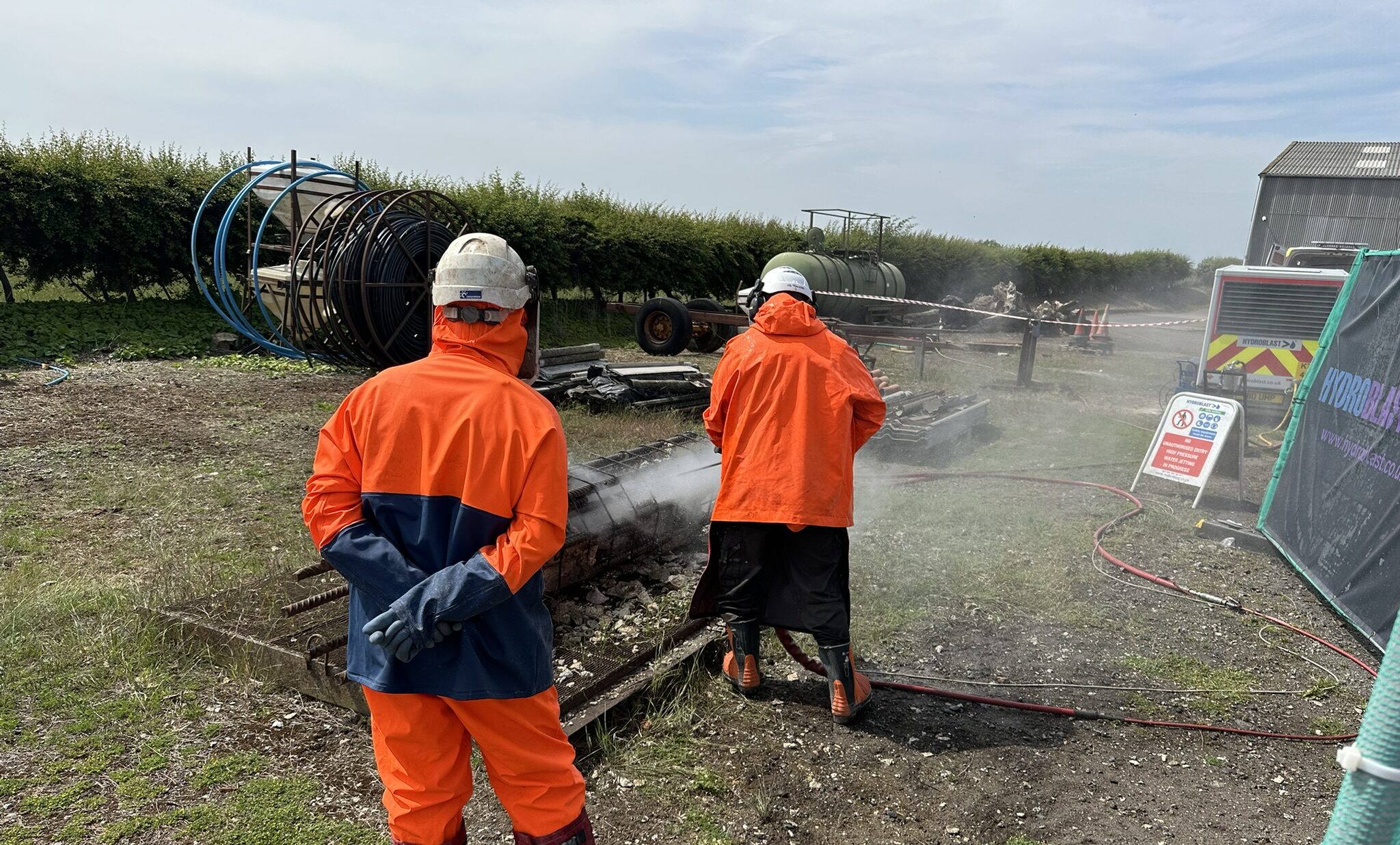
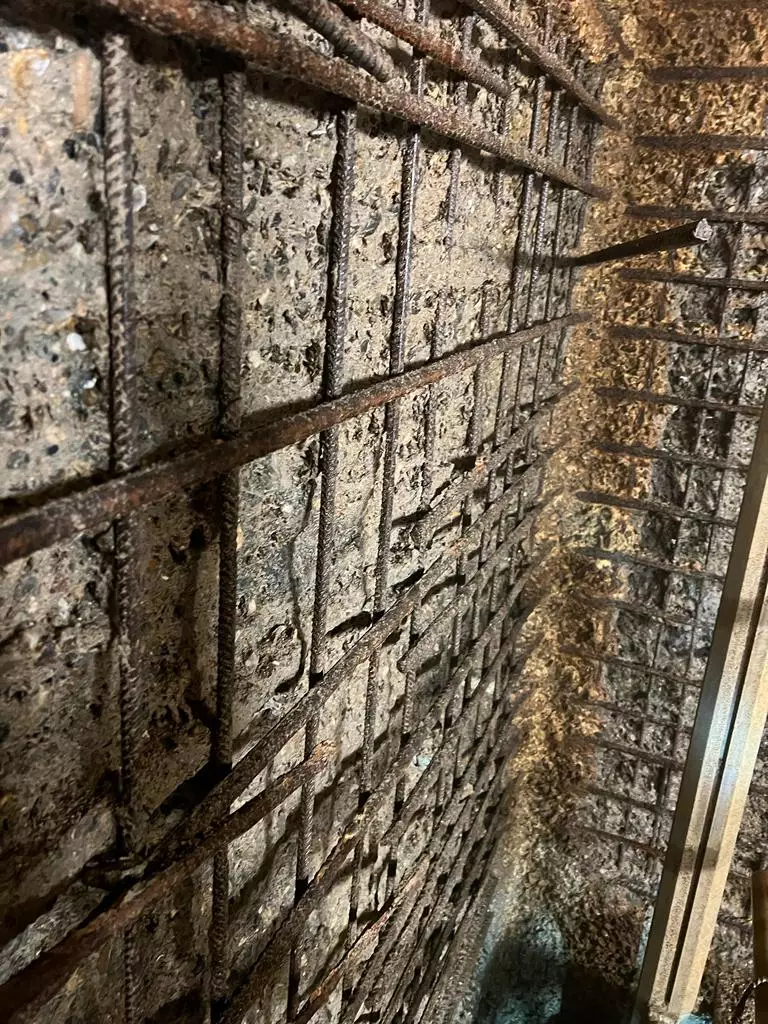
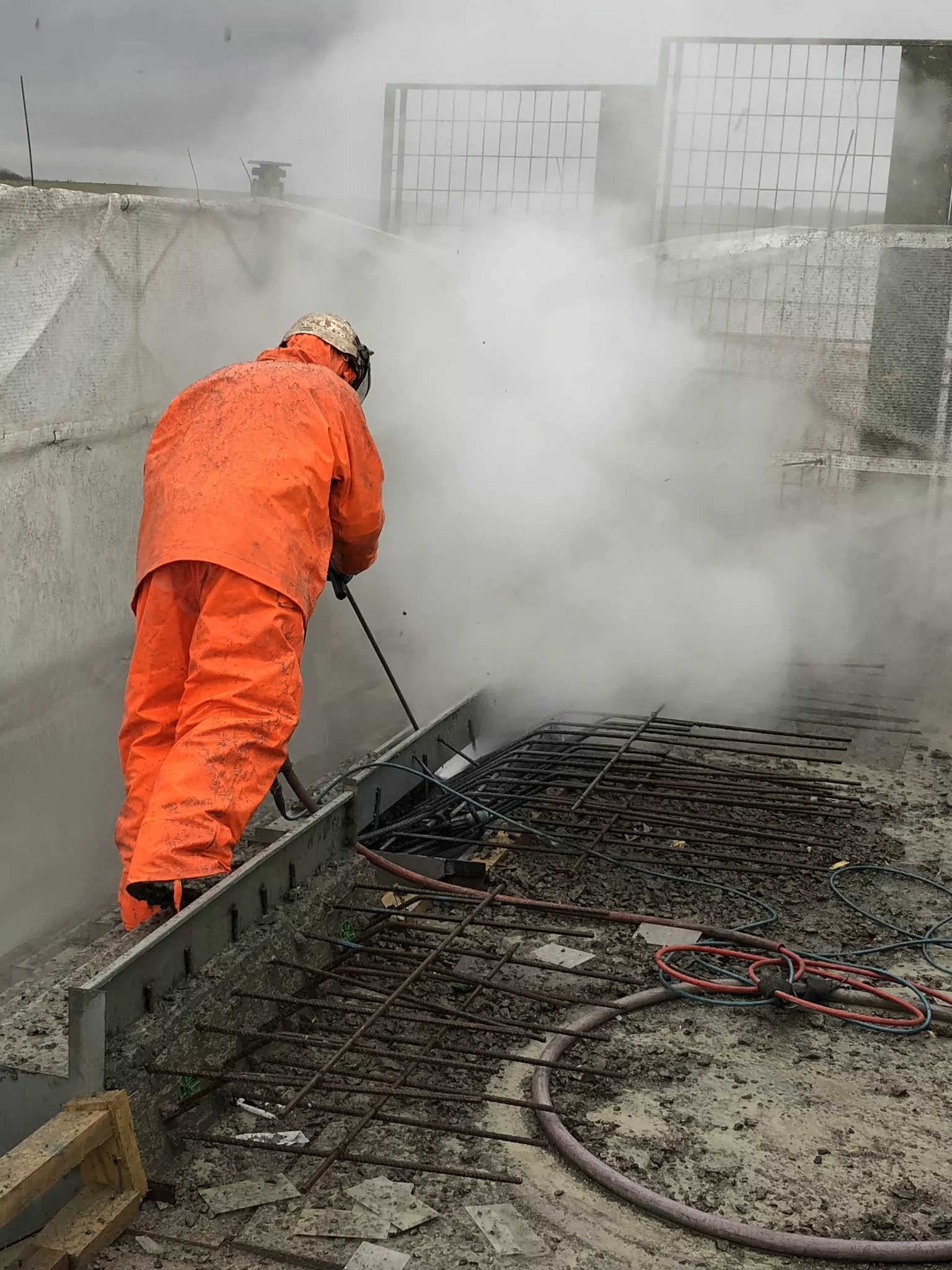
This course is designed for operatives involved in hydrodemolition activities using high-pressure and ultra-high-pressure water jetting equipment, who require a clear understanding of the risks, techniques and correct use of equipment to remove concrete safely, accurately and efficiently without damaging surrounding structures.
Yes. Participants must hold a current, valid WJA Safety Awareness Photocard before attending this course, which is required to validate all WJA training and certification.
This one-day course combines classroom-based theory with practical, hands-on training. The theory element covers the principles of hydrodemolition, safe working practices, equipment selection, pressures, nozzles and accessories, and the controlled removal of concrete without damaging steel reinforcement or surrounding structures. Participants then complete a practical session using high-pressure and ultra-high-pressure water jetting equipment to demonstrate safe and competent hydrodemolition techniques. Successful completion of both the theoretical and practical elements is required to pass the course.
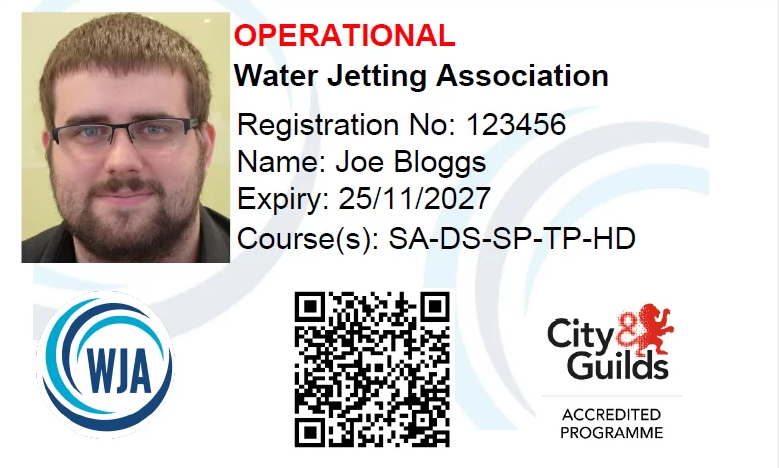
Once the course has been successfully completed, participants will be issued with a WJA Hydro Demolition Photocard and granted access to the WJA App, both issued by the Water Jetting Association (WJA). The photocard confirms the holder’s competence in hydrodemolition and remains valid indefinitely, provided a current, valid WJA Safety Awareness Photocard is maintained at all times.
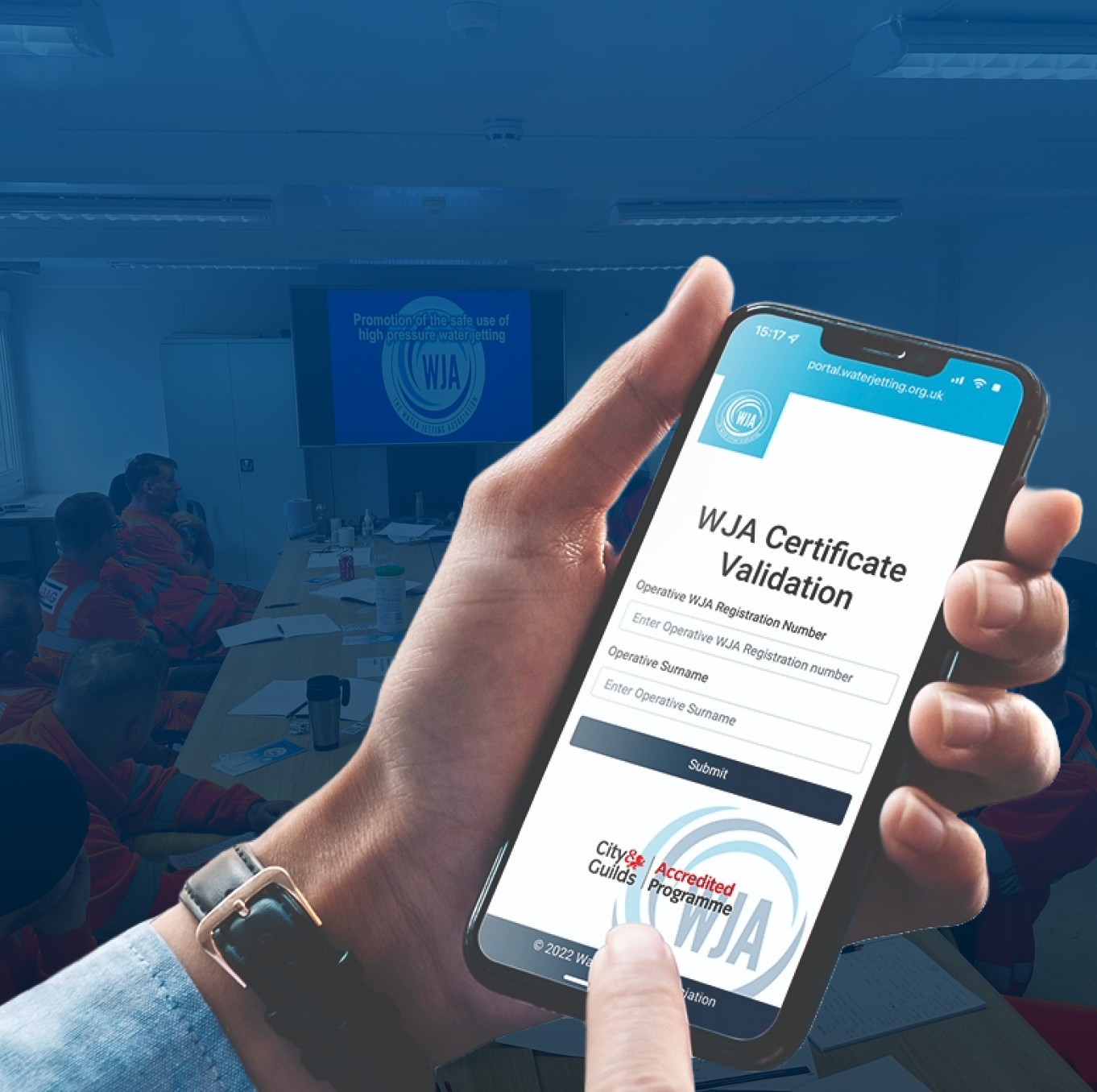
In place of a physical certificate, successful candidates receive digital access to their certification via the WJA App, allowing them to view a digital version of their photo ID card and training record. This digital approach reduces the need for paper documentation and supports the WJA’s commitment to a more sustainable, efficient and modern system for managing water jetting credentials.


(included only when presented as a ‘Stand-Alone’ Course):
Nozzles and Jets, Pumps and Ancillaries, Pressure Controls, High Pressure Hose, Hazards and Injuries, Personal Protective Equipment, Operational Procedures.
Scope of cutting and breaking applications, including both onsite and manufacturing processes. Range of, and differentiation between cutting/breaking tasks. Range of Jetting Machines suitable for cutting/breaking.
Review nozzle principles – fixed jet nozzles, abrasive cutting nozzles, nozzle life and wear characteristics, associated ancillary equipment including automatic, semi-automatic.
Hose used in cutting and breaking applications, damage and wear possibilities, hose ancillaries. Review bore size and flow ratings.
Range of jetting machines used, engine controls and instruments. Pump pressure controls, review dump/dry shut and selector/fail safe types, auto engine speed control systems, pressure safety relief. Water supply/delivery features – filtration requirements, boost feed pumps, built-in anti-freeze provisions.
Information and assessment – site location, access to work area and layout, material to be cut/removed, work piece and task features, water provision, waste disposal, hazards. Selection of equipment and manning levels – jetting machine/nozzles/accessories, number and duties of operators, single person operation. Determine job method, based on safe system of work.
Daily checks – manufacturer’s instructions, other items requiring regular checks. Setting-up – permits/authorisations, barriers and warning signs, positioning of machine and equipment, team duties and signals, flushing, leaks check, trial run. Monitoring of operation – flying debris, waste contamination, work standard. Job completion – client inspection, waste removal, equipment decontamination, return site to safe condition.
Jetting machine and equipment – review features, and demonstrate daily checks, start/run/stop. Job assessment – review and discuss, site location and constraints, accessibility, screening/extraction requirements. Work piece – nature of material and work to be carried out. Water supply, effluent drainage. Hazards and use of PPE. Discussion of options and agree job method. Site preparation – setting up work area. Team talk – review job method, signal, set up team(s). Position jetting machine, layout and check equipment. Demonstrate all procedures to full group. For all teams, instruct each operator in each duty. Trainees carry out exercise, each team following instructions to set up, flush, check for leaks, carry out trial run, proceed with operation. Rotate team members through duties. Review at each rotation and final review. Disconnect equipment and clear site.
Review of course content as above, with opportunity for any further discussion before Questionnaire.